IVF Injection Bruising: What Actually Helps
By the second week of stimulation a lot of people look down and find their abdomen mottled green and yellow, with a few fresh purple marks on top. It is not painful exactly, but it is a daily visual reminder of what you are doing to yourself, and it makes choosing tomorrow's injection site genuinely harder.
Bruising is the most common complaint of stims week and one of the few where small changes in technique measurably help. Not eliminate, help.
Worth saying at the start: some bruising is expected and is not a sign you are doing it wrong.
Why it happens
A subcutaneous injection goes through the skin and into the fatty layer below it, and there are small blood vessels running through that layer. Every so often the needle catches one. The blood then seeps into the tissue around it, and what shows up over the following day or two is that blood spreading out and then breaking down.
So bruising is not about doing it too hard or being clumsy. It is largely about where the needle happened to land, which is why it varies night to night with identical technique.
Two things stack the odds against you during stims. You are injecting daily, sometimes more than once, for eight to 15 days, so the sheer number of attempts is high. And you are returning to a small area of the body repeatedly, into tissue that has already been disturbed.
Cold, and what the evidence actually shows
Ice gets recommended constantly, usually without much detail. There is better evidence than the advice suggests, and a useful specific in it.
A randomised controlled trial compared cold applied for two minutes, cold applied for five minutes, and no cold at all before a subcutaneous injection. At 48 hours, bruising occurred in 11.5 percent of the two-minute group and 11.5 percent of the five-minute group, against 38.5 percent with no cold. Pain scores were substantially lower in both cold groups.
The interesting part is bruise size. Two minutes produced a mean bruise of 4.00 mm against 15.00 mm with no cold, and the two-minute application beat the five-minute one on size. Longer was not better.
One honest caveat. That trial used low-molecular-weight heparin, not fertility drugs. It is the same injection route into the same tissue, so the mechanism carries over, but nobody has run this specific study on gonadotropins. Treat it as good evidence about subcutaneous injections generally rather than a finding about your medication.
Cold constricts the small vessels, which is why brief application before the needle goes in does more than a long soak. Cleveland Clinic also mentions applying ice for soreness afterwards.
Press, do not rub
This is the cheapest improvement available and the one most people get wrong.
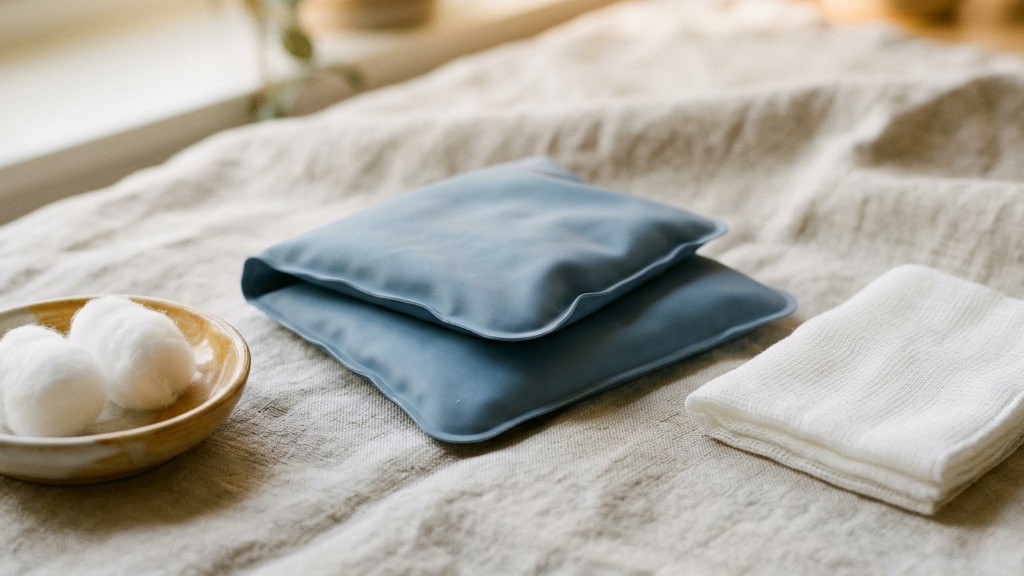
After the needle comes out, hold steady gentle pressure with clean gauze or cotton for around half a minute. That compresses any vessel the needle caught, and gives it a chance to seal before blood spreads.
Do not rub or massage the site. Rubbing disperses blood through the tissue, which turns a small mark into a large one. The instinct to rub is strong and it actively works against you.
Note this applies to subcutaneous injections. Intramuscular progesterone is the opposite case, where patient instructions often ask for warmth and massage afterwards to help absorption and prevent lumps. Different injection, different aftercare, and it is worth keeping the two straight.
Before the needle goes in
A few things that reduce your total bruise count over a fortnight:
- Rotate properly. MedlinePlus advises changing site each time, at least an inch apart. Repeatedly hitting tissue that is already bruised makes the next bruise worse and absorption less predictable.
- Let refrigerated medication come to room temperature if your instructions allow it. Cold fluid into tissue stings more, and flinching mid-injection is its own problem.
- Inject slowly and steadily. Pushing fast forces fluid into a small space and adds trauma.
- Go in decisively. Hesitating and part-inserting causes more damage than a quick confident entry. This is the opposite of what nervousness suggests.
- Do not reuse a needle. A blunted tip tears rather than pierces.
None of these are dramatic individually. Together they change how the second week looks.
The blood-thinner question, which is your clinic's to answer
You will read that aspirin, ibuprofen, fish oil and vitamin E increase bruising because they affect clotting. That much is broadly true.
What you should not do is act on it alone. Some of those may have been prescribed to you deliberately as part of your protocol, and stopping something on your own because a blog mentioned bruising is a much bigger risk than a bruise.
So the rule here is narrow and firm: ask your clinic what you should and should not be taking, including supplements and over-the-counter painkillers, and follow their answer. Never stop or start anything on the strength of an article, this one included.
The bruises you already have
Most of the advice above is preventive, which is unhelpful if your abdomen is already patterned. A few things about the ones already there.
Healing bruises move through colours, usually starting red or purple, going blue then green, and finishing yellowish-brown before they disappear. All of that is the blood being broken down and cleared away. So a bruise going green is on its way out rather than getting worse, which is worth knowing because green looks far more sinister than it is.
Most fade within one to two weeks, which means during a fortnight of daily injections you will always have several at different stages. The mottled effect people describe is just three or four generations of bruise visible at once.
Arnica creams and gels get recommended constantly in fertility groups. The evidence for them is thin, and more importantly, you should not put anything on skin you are about to inject through without asking your clinic first. The same goes for heat: warmth may help an older bruise but is not what you want on a site from tonight.
The practical move is not treating the bruises. It is having enough unbruised territory in rotation that you are never forced back onto a fresh one.
When a bruise is not just a bruise
Most marks resolve on their own over a week or two and need nothing.
Some things are worth reporting rather than watching. A site that becomes increasingly red, hot, swollen or painful over days instead of settling. Any sign of infection. A hard lump that is not resolving. Bruising that seems wildly out of proportion to the injections, or that appears in places you have not injected.
Escalating pain at a site is a phone call, not a research project. Clinics would rather hear about it early, and the injection-site aftercare you are given is easier to adjust than an infection is to treat.
Keeping ahead of it
The practical fix for bruising is knowing where you have already been, which stops being memorable around day five. Logging each site with a note on how it felt turns tomorrow's choice into a decision rather than a hunt for unmarked skin, and it is the same habit that makes rotating injection sites work at all.
It also gives you something concrete for your next appointment. "The left side has been sore since Tuesday" is more useful to a nurse than "it is all a bit bruised".
Marigold keeps a body map with a comfort rating per injection for exactly this, alongside the doses you are logging through stims week. It records and organises. It does not give medical advice, and your clinic's guidance governs your treatment.
If you want the site map in your pocket, Marigold is free to download on the App Store.